

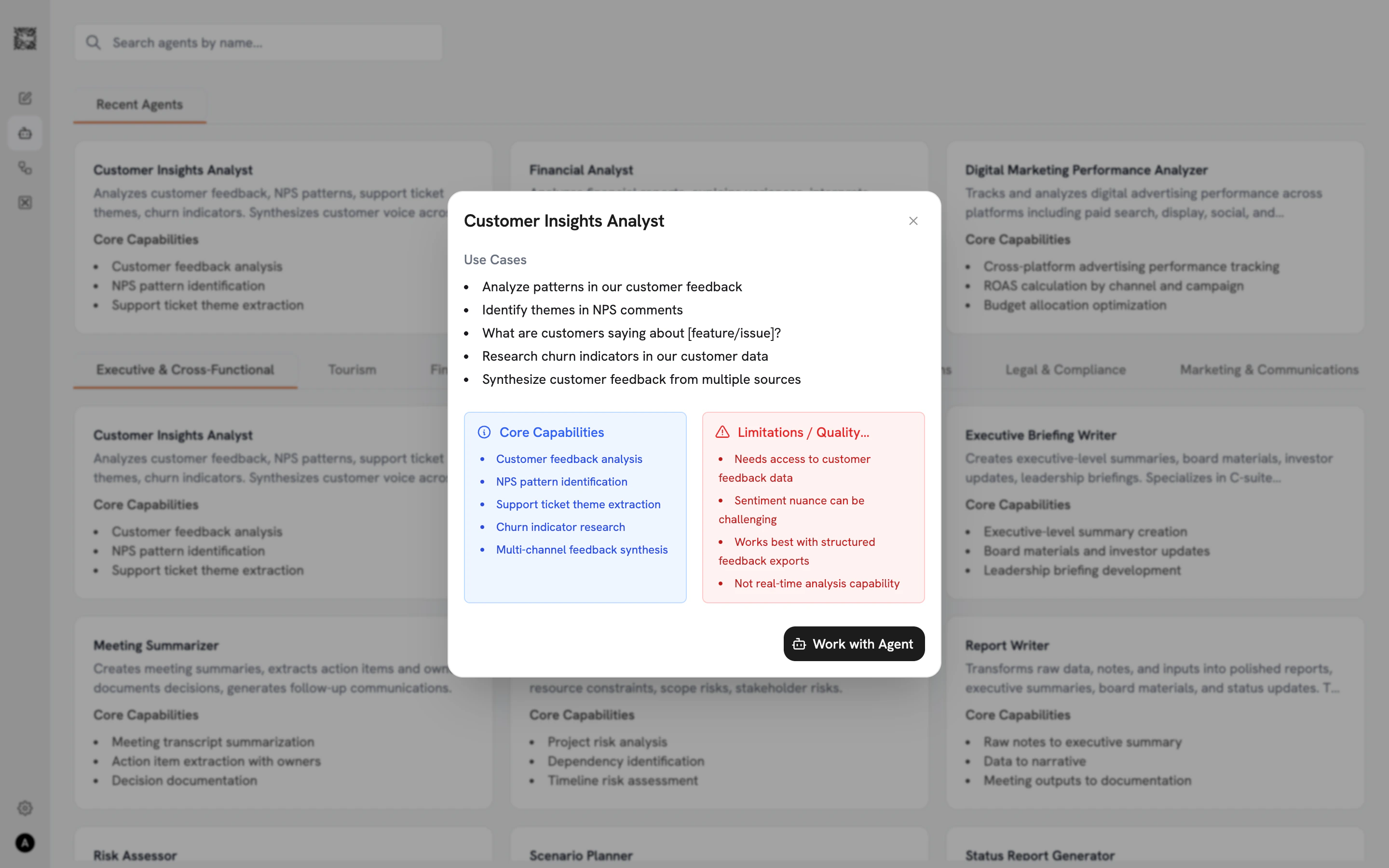
The Agent conversation
When you start working with an Agent, a new chat opens with two distinguishing features: Blue identity banner: A persistent banner at the top reads “I’m [Agent Name] and we’re working on this together.” This stays visible throughout the conversation so you always know which specialist you are working with. Four capability icons: Agent conversations show a reduced set of capabilities in the input bar: Attachment (paperclip), Actions & MCP (play button), Deep Research (telescope), and Knowledge Grounding (two-plug). The three capabilities available only in regular chat (Web Search, Data & Graph, Agent selector) are not shown. Type what you need and press Enter. The rotating greeting text appears (same as the Chat home), but the eight prompt suggestion cards are absent. Your Agent is ready for your specific request.Thinking and response
Your Agent processes your request in visible steps:- Thinking state: A “Thinking” label appears with a bold step name (e.g., “Providing troubleshooting tips”) and visible reasoning text. You can see your Agent’s chain-of-thought as it works.
- Completed state: The thinking section collapses to an expandable “N steps >” summary. The full structured response appears below: formatted text, bullet lists, tables, and suggested next steps.
Response interaction
Below each response, three icons appear:- Thumbs up: Signal that the response was helpful.
- Thumbs down: Signal that the response missed the mark.
- Copy: Copy the full response to your clipboard.
Tips for better results
- Be specific about your deliverable. “Analyze this quarter’s revenue” is good. “Analyze Q4 revenue, focus on subscription growth, format as an executive summary” is better.
- Attach relevant files. Use the paperclip icon to upload documents or select from your Vault. More context produces more grounded results.
- Enable Knowledge Grounding. Toggle on the two-plug icon to let your Agent search your organization’s connected data sources. Filter to specific Connectors for precise results.
- Match the Agent to the task. Each Agent is built for specific work. The right specialist produces better results than a generalist.
- Save Memories. Go to Settings > Personalization and add notes about your role, preferences, and the formats you work with. Your Agents reference these in every conversation.
Use Cases
See Agents in action across departments
Workflows
When you need multiple Agents working together